
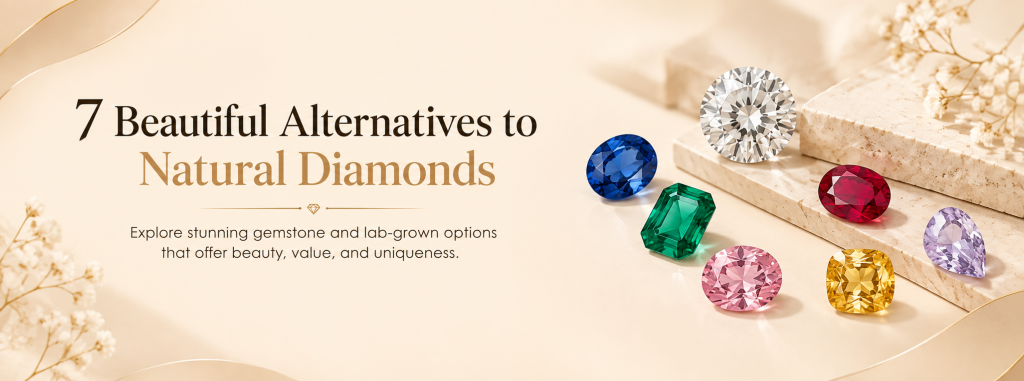
Diamonds are a classic choice for engagement rings and fine jewelry, but they are not the only stones worth considering. Depending on your budget, preferred color, lifestyle, and how often you plan to wear the piece, a different gemstone may be an equally beautiful choice. Some alternatives closely resemble a colorless diamond, while others offer distinctive pink, blue, green, or red color.
Before choosing, consider three things: appearance, durability, and budget. Hardness measures resistance to scratching, but overall durability also depends on toughness, inclusions, setting style, and how the jewelry is worn.
Diamond Alternative Comparison at a Glance
| Stone | Appearance | Mohs Hardness | Wearability | Typical Price Level | Best For |
| Lab-grown diamond | Colorless to near-colorless; true diamond appearance | 10 | Excellent for daily wear | $$$ | Diamond beauty with a different origin |
| White topaz | Clear and bright with softer sparkle | 8 | Good with mindful wear | $ | Affordable colorless look |
| Morganite | Blush pink to peach | 7.5–8 | Moderate | $ | Romantic color |
| Aquamarine | Pale blue to blue-green | 7.5–8 | Good with care | $–$$ | Cool, serene color |
| Emerald | Rich green, often naturally included | 7.5–8 | Needs extra care | $$ | Distinctive luxury color |
| Sapphire | Blue or many fancy colors | 9 | Excellent | $$–$$$ | Color plus durability |
| Ruby | Rich red to purplish red | 9 | Excellent | $$$ | Bold, classic color |
1. Lab-Grown Diamonds

| Best for | Diamond appearance and everyday durability |
| Durability | Mohs 10; excellent for frequent wear |
Lab-grown diamonds are diamonds created in controlled environments rather than formed underground. They have the same basic crystal structure and optical properties as natural diamonds, so they deliver the familiar brilliance, fire, and hardness associated with diamond jewelry.
For shoppers who want a true diamond while prioritizing budget or origin, lab-grown diamonds can make a larger or higher-grade stone more accessible than a comparable natural diamond.
Why choose it
- True diamond brilliance and hardness.
- Suitable for engagement rings and everyday jewelry.
- Available in the same popular shapes and grading categories as natural diamonds.
- Often offers more size or quality for the budget.
What to consider
- The main difference is origin, not appearance.
- Resale expectations can differ from natural diamonds, so purchase primarily for wear and enjoyment.
Jewelry styles that work well
- Solitaire and three-stone engagement rings.
- Stud earrings and pendants.
- Tennis bracelets and anniversary bands.
2. White Topaz
| Best for | A bright, colorless look at an approachable price |
| Durability | Mohs 8; suitable for regular wear with care |

White topaz is a natural colorless gemstone with a clean, crystalline appearance. It can give jewelry a bright diamond-inspired look without the price of diamond.
Its sparkle is generally softer than a diamond’s, but its affordability makes it attractive for fashion rings, earrings, pendants, and pieces where a larger colorless center stone is desired.
Why choose it
- Natural gemstone with a clear appearance.
- Budget-friendly.
- Looks elegant in white metals and yellow gold.
- Good choice for occasional statement pieces.
What to consider
- Can scratch or abrade more easily than diamond or sapphire.
- May look less lively over time if surface wear develops.
- Not the closest match if maximum diamond-like fire is the priority.
Jewelry styles that work well
- Solitaire pendants.
- Stackable rings.
- Stud or drop earrings.
Care tip
Clean with mild soap, warm water, and a soft brush. Store separately from harder stones to reduce scratching.
3. Morganite

| Best for | Soft pink or peach color with romantic appeal |
| Durability | Mohs 7.5–8; moderate durability |
Morganite belongs to the beryl family and is loved for its pale pink, peach, and blush tones. Instead of imitating a diamond, it offers a soft color that feels romantic and distinctive.
Morganite is especially popular in rose gold, where the warm metal enhances its pink tone. It can also look modern in white gold or platinum for more contrast.
Why choose it
- Delicate pink-to-peach color.
- Often available in visually generous sizes.
- Works beautifully with rose gold.
- A distinctive choice for romantic or vintage-inspired jewelry.
What to consider
- Requires more care than diamond, sapphire, or ruby.
- Can show surface wear if exposed to frequent impact or abrasion.
- Color may appear subtle in some lighting.
Jewelry styles that work well
- Halo engagement rings.
- East-west rings.
- Stud earrings and pendants.
Care tip
Avoid hard impacts and abrasive contact. Regular gentle cleaning helps preserve its clarity and soft glow.
4. Aquamarine
| Best for | Cool blue color and a light, airy look |
| Durability | Mohs 7.5–8; durable with mindful handling |

Aquamarine is known for pale blue, icy blue, and blue-green tones. Its transparent, calming color gives jewelry a clean and elegant look that feels different from a traditional diamond while remaining easy to wear.
Because many aquamarines have good clarity, larger stones can create a graceful statement without appearing heavy. The gem pairs especially well with white gold, platinum, and rose gold.
Why choose it
- Fresh blue color with a refined look.
- Often relatively clean to the eye.
- Works well in larger center-stone designs.
- Beautiful for meaningful or birthstone jewelry.
What to consider
- Less scratch-resistant than diamond or sapphire.
- Should be protected from sharp impacts.
- Very pale stones may show less color once set.
Jewelry styles that work well
- Emerald-cut or oval rings.
- Solitaire pendants.
- Stud earrings and three-stone jewelry.
Care tip
Use warm soapy water and gentle cleaning. Avoid harsh treatment and strong impacts.
5. Emerald

| Best for | Rich green color and unmistakable character |
| Durability | Mohs 7.5–8; fair wearability because inclusions can affect toughness |
Emerald is prized for saturated green color and its naturally distinctive internal characteristics. Many emeralds contain visible inclusions, traditionally called a jardin, that form part of the stone’s character.
Although emerald has respectable hardness, it is typically more fragile than sapphire or ruby because internal inclusions can reduce toughness. For this reason, thoughtful setting design and careful wear are important.
Why choose it
- Iconic green color.
- Strong individuality and luxury appeal.
- Beautiful in both vintage and minimalist designs.
- Pairs especially well with yellow gold.
What to consider
- Needs more careful handling than many other gems.
- Inclusions can make some stones more vulnerable to impact.
- Ultrasonic or steam cleaning may not be appropriate for treated or included emeralds.
Jewelry styles that work well
- Protective halo or bezel-inspired designs.
- Five-stone rings.
- Classic pendants and earrings.
Care tip
Use gentle cleaning methods and follow a jeweler’s advice, particularly for treated stones. Avoid ultrasonic cleaning unless specifically approved.
6. Sapphire
| Best for | Durable color for engagement rings and daily jewelry |
| Durability | Mohs 9; excellent for frequent wear |

Sapphire is one of the strongest colored gemstone choices for everyday jewelry. Blue is the classic color, but sapphires also occur in pink, yellow, green, white, and other shades.
Its high hardness, rich color, and timeless reputation make sapphire an excellent choice for engagement rings, anniversary jewelry, and pieces intended for frequent wear.
Why choose it
- Excellent scratch resistance.
- Available in many colors.
- Suitable for daily-wear rings.
- Pairs well with white, yellow, or rose metals.
What to consider
- Color and quality can vary considerably between stones.
- Some sapphires are heat treated, so disclosure and documentation are useful when comparing options.
Jewelry styles that work well
- Classic solitaires.
- Three-stone rings with diamond accents.
- Eternity bands, earrings, and pendants.
7. Ruby

| Best for | Bold red color with excellent durability |
| Durability | Mohs 9; excellent for frequent wear |
Ruby is the red variety of corundum, the same mineral family as sapphire. It is valued for rich red color ranging from bright red to deeper crimson or slightly purplish tones.
With a hardness of 9, ruby is a practical colored gemstone for rings and other frequently worn jewelry. Its dramatic color works beautifully with yellow, rose, and white metals.
Why choose it
- Excellent hardness for a colored gemstone.
- Bold, luxurious color.
- Long history in fine jewelry.
- Suitable for both classic and modern designs.
What to consider
- Fine rubies can be expensive.
- Color, origin, treatment, and clarity can significantly affect value.
- Some rubies are treated, so documentation matters for higher-value purchases.
Jewelry styles that work well
- Engagement rings and anniversary bands.
- Statement pendants.
- Stud, hoop, and drop earrings.
Other Diamond Alternatives Worth Considering
Moissanite
Moissanite is one of the closest visual alternatives to a diamond. It is extremely brilliant, highly scratch-resistant (about 9.25 on the Mohs scale), and well suited to daily wear. Its light performance can show more rainbow-colored fire than a diamond, which some shoppers love and others prefer to avoid.
Cubic Zirconia (CZ)
Cubic zirconia is a synthetic, inexpensive diamond simulant. It can look bright and colorless when new, but it is softer and more likely to scratch or become cloudy with long-term wear. It is best suited to fashion jewelry, travel jewelry, or temporary pieces.
White Sapphire
White sapphire is a natural colorless gemstone with good durability (Mohs 9). It is less brilliant and fiery than diamond or moissanite, giving it a softer, more understated look. It can be a good choice for shoppers who want a natural, colorless gem with strong everyday wearability.
Frequently Asked Questions
What is the best alternative to a natural diamond?
It depends on your goal. A lab-grown diamond is best for shoppers who want a true diamond with a different origin. Moissanite is one of the strongest diamond-like simulants. Sapphire and ruby are excellent if you prefer color and everyday durability.
Which diamond alternative is best for an engagement ring?
For frequent wear, prioritize durable options such as lab-grown diamond, sapphire, ruby, or moissanite. Other gemstones can also work, but may require more protective settings and careful wear.
What is the most affordable diamond alternative?
Cubic zirconia and white topaz are among the most budget-friendly. White topaz is a natural gemstone, while cubic zirconia is synthetic.
Which alternatives look most like a diamond?
Lab-grown diamonds look like natural diamonds because they are diamonds. Moissanite, white sapphire, white topaz, and cubic zirconia can also create a colorless diamond-inspired appearance, but each has different sparkle and durability.
Are colored gemstones durable enough for everyday jewelry?
Some are. Sapphire and ruby are excellent for frequent wear. Aquamarine and morganite can be worn regularly with care, while emerald generally requires more protection because inclusions can reduce toughness.
Does Mohs hardness tell me everything about durability?
No. Mohs hardness measures scratch resistance. A gemstone’s toughness, inclusions, cleavage, treatments, setting, and how it is worn also affect overall durability.
Are diamond alternatives a financial investment?
Jewelry should generally be purchased for beauty, meaning, and wear rather than guaranteed financial return. Resale value varies widely by gemstone, quality, rarity, treatment, documentation, and market demand.
