
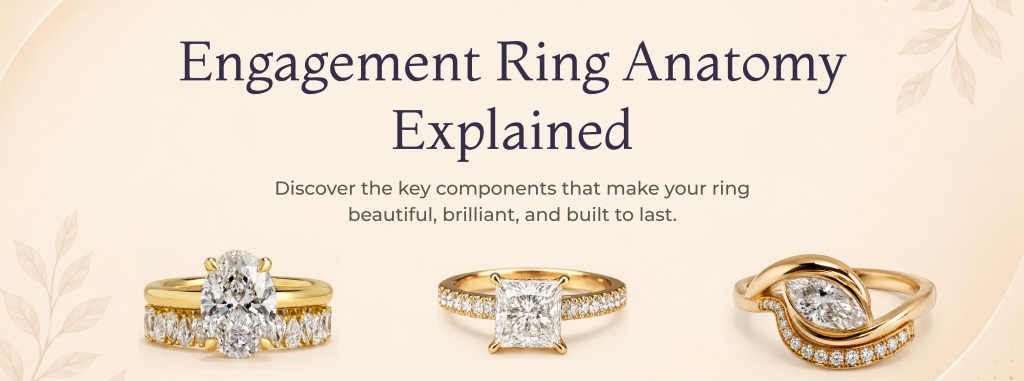
An engagement ring represents a meaningful promise, but behind its beauty is a carefully engineered structure where every component has an important role. From the center stone that creates the first impression to the smallest details inside the band, each part contributes to the ring’s appearance, comfort, durability, and long-term value.
Understanding the anatomy of an engagement ring helps customers make informed decisions, compare different styles, and communicate their ideas when designing a custom piece of jewelry.
The Fundamental Parts of a Ring

An engagement ring is mainly made up of two primary elements: the center stone and the setting. The center stone provides the visual focus, while the setting creates the structure that protects and displays the gemstone. Together, they determine the overall character, style, and functionality of the ring.
1. The Center Stone
The center stone is the main gemstone positioned at the center of the ring and is usually the most noticeable feature. Diamonds remain the traditional choice for engagement rings because of their brilliance, hardness, and timeless appeal. However, colored gemstones such as sapphires, emeralds, rubies, and other precious stones are also popular for couples who want a more unique and personal design.
Important factors such as gemstone shape, carat weight, cut quality, clarity, and color influence the final appearance of the ring. Different shapes, including round, oval, pear, emerald, princess, and marquise cuts, create different visual effects.
2. The Setting
The setting is the metal framework that holds the center stone securely. It includes several structural parts such as the head, prongs, gallery, shoulders, bridge, and shank.
Beyond protecting the gemstone, the setting controls how much light reaches the stone, how high it sits above the finger, and how comfortable the ring feels during everyday wear. Popular setting styles include solitaire, halo, bezel, three-stone, and pavé designs.
The Functional Parts of an Engagement Ring
1. Head
The head is the top portion of the ring that holds the center stone in place. It sits above the band and includes the prongs, bezel, or other components that secure the stone. The head determines how high low the stone rests on the finger, which affects both the ring’s appearance and how practical it feels for everyday wear. It also plays a major role in how much light reaches the stone, directly influencing sparkle and brilliance.
The height and design of the head influence both appearance and practicality. A high-set head creates a dramatic look and allows more light exposure, while a low-profile head provides better protection and comfort for active lifestyles.
2. Prongs
Prongs are the small metal arms that secure the center stone within the head of the ring. Their shape, size, number (most commonly four or six), and placement affect both the stone’s security and how much of it remains visible.
Four-prong settings usually provide a cleaner view of the gemstone, while six-prong settings offer additional support. Different prong styles include rounded, claw, split, and decorative designs.

3. Gallery

The gallery is the open space beneath the center stone. It supports the setting and allows light to pass through the stone from below, contributing to its brilliance. The gallery also shapes the ring’s side profile and often includes decorative metalwork or accent stones.
Many custom rings include detailed gallery designs such as hidden halos, floral patterns, engraving, or accent diamonds that add extra beauty when viewed from the side.
4. Shoulders
The shoulder is the upper portion of the band that rises toward the center stone. It visually connects the shank to the head and creates balance in the ring’s design. The width and shape of the shoulders can significantly influence how delicate or substantial the ring appears when viewed from above.
Shoulder designs can be simple and elegant or highly detailed with diamonds, curves, twists, or split structures.

5. Shank

The shank, commonly called the band, is the part of the ring that wraps around the finger. It forms the structural foundation of the ring and strongly influences comfort and durability. The thickness and shape of the shank affect how the ring feels on the hand and how well it wears over time.
Different shank profiles include rounded, flat, knife-edge, and comfort-fit designs. A thicker shank generally provides more strength, while a thinner shank creates a delicate appearance.
6. Bridge
The bridge is the horizontal support located beneath the head. It stabilizes the head, connects it to the shank, and distributes the weight of the center stone more evenly across the band to improve long-term durability.
In designer and custom rings, bridges can include decorative elements or accent stones that enhance the overall design.

7. Sizing Bar
The sizing bar is the small section at the bottom of the shank typically opposite the center stone. This area allows the ring to be resized in the future, an important feature as finger size can naturally change over time. A well-designed sizing area helps preserve the shank’s structural integrity during resizing.
A properly designed sizing area helps jewelers maintain the ring’s strength while making size changes when needed.
8. Hallmark
The hallmark is a small stamp placed inside the ring that identifies metal type and purity. Examples include 14K, 18K, and platinum markings.
It helps verify authenticity and provides useful information for future maintenance, repair, and valuation.
Why Understanding Ring Anatomy Matters
Knowing the different parts of an engagement ring allows buyers to understand design choices and make better decisions. For example, someone who wears jewelry daily may prefer a lower setting with stronger protection, while someone focused on maximum sparkle may choose a design that exposes more of the gemstone.
Understanding ring anatomy also helps customers understand why two rings with similar gemstones can have different prices based on craftsmanship, metal weight, setting complexity, and design details.
Choosing the Right Ring Design
The ideal engagement ring should combine beauty, comfort, durability, and personal style. Important considerations include gemstone shape, setting type, metal choice, lifestyle requirements, and maintenance needs.
A well-designed engagement ring is not only a symbol of love but also a piece of craftsmanship created to be worn and enjoyed for generations.
